


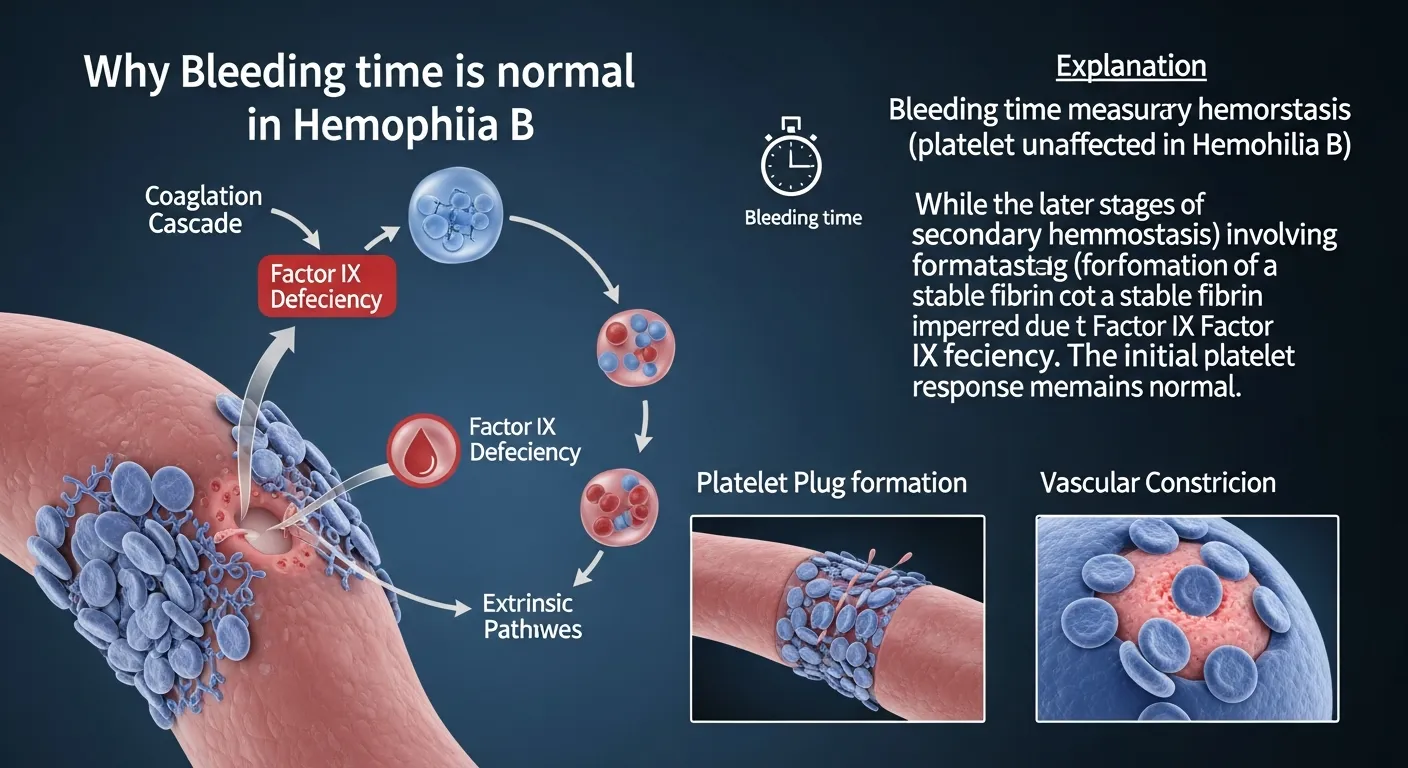
Bleeding time in Hemophilia B is usually normal or only slightly affected because the condition involves Factor IX deficiency, which affects clotting but not platelet function. It primarily leads to prolonged bleeding after injuries or surgery.
The bleeding time in hemophilia B is typically normal because this specific test measures primary hemostasis (platelet plug formation), which functions correctly in hemophilia B patients. Hemophilia B is a secondary hemostasis disorder caused by a Factor IX deficiency, requiring specific coagulation assays rather than a bleeding time test for an accurate diagnosis.
When medical professionals evaluate a patient for a bleeding disorder, they look at several different stages of blood clotting. A common point of confusion arises when patients present with severe bruising or joint bleeds, yet certain initial blood tests come back completely normal. Understanding the bleeding time in hemophilia B requires a deep dive into how our blood forms clots and why some tests fail to detect specific genetic deficiencies.
Hemophilia B, also known as Christmas disease, is a rare genetic blood disorder. It prevents the blood from clotting properly due to a lack of a specific protein, Factor IX, which is essential for the coagulation cascade. Diagnosing this condition correctly is critical for effective management. If you rely on the wrong tests, you might miss the underlying cause of the patient’s symptoms entirely.
Bleeding Time in Hemophilia B and Clotting Mechanism
To better understand the bleeding time in hemophilia B, it is important to distinguish between primary and secondary hemostasis. Primary hemostasis involves platelet adhesion and aggregation, which forms an initial plug at the site of injury. This process remains unaffected in hemophilia B, which is why bleeding time results are usually normal.
However, secondary hemostasis is where the real problem occurs. In hemophilia B, the deficiency of Factor IX disrupts the coagulation cascade, preventing the formation of a stable fibrin clot. As a result, even though the initial platelet plug forms, it is weak and easily breaks down, leading to prolonged and deep bleeding episodes, especially into joints and muscles.
Clinical Importance of Bleeding Time in Hemophilia B
The bleeding time in hemophilia B is not considered a reliable diagnostic marker. Instead, clinicians rely on more specific laboratory tests such as activated partial thromboplastin time (aPTT) and Factor IX activity assays. These tests directly assess the function of the intrinsic coagulation pathway and confirm the deficiency.
This distinction is crucial because patients often present with symptoms that suggest a bleeding disorder, yet routine screening may not immediately reveal the problem. Without understanding the limitations of bleeding time testing, there is a risk of misdiagnosis or delayed treatment.
What exactly is Hemophilia B and how does the genetic mutation occur?
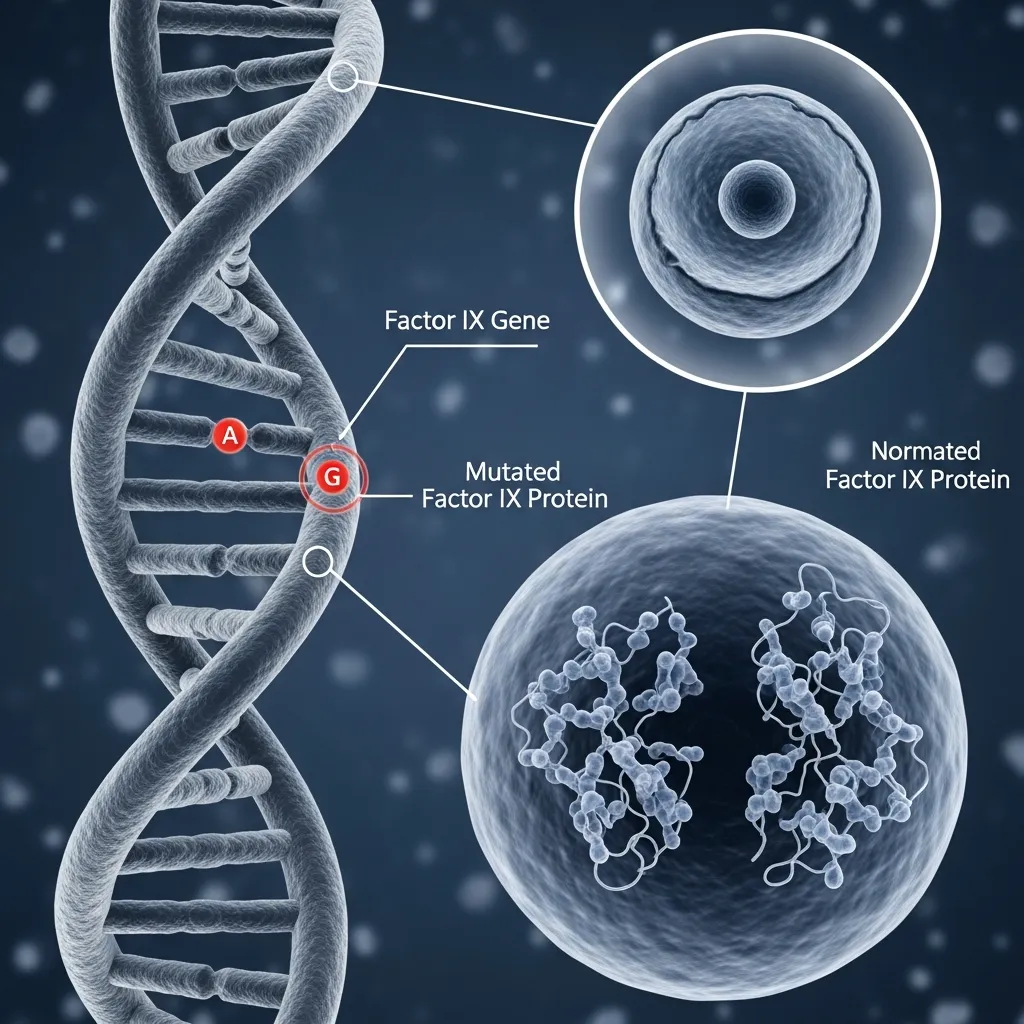 Hemophilia B is an inherited bleeding disorder caused by a deficiency in coagulation Factor IX. This protein plays a mandatory role in the complex chemical cascade that forms a stable blood clot.
How does the inheritance pattern of Hemophilia B affect its prevalence?
Hemophilia B follows an X-linked recessive inheritance pattern. This means the mutation occurs on the X chromosome. Because males inherit one X chromosome and one Y chromosome, a single defective X chromosome will cause the disease. Females have two X chromosomes, so they typically become carriers if they inherit one mutated gene. According to the Centers for Disease Control and Prevention [CDC, 2022], hemophilia B occurs in approximately 1 in 25,000 male births worldwide (link: https://www.cdc.gov/ncbddd/hemophilia/index.html).
To understand the bleeding time in hemophilia B, we must first look at what the bleeding time test actually measures.
How is the bleeding time measured using the Ivy, Duke, and PFA-100 methods?
The traditional bleeding time test measures how long it takes for a small, standardized cut to stop bleeding.
- Duke Method: A clinician pricks the patient’s earlobe or fingertip and wipes away the blood every 30 seconds until the bleeding stops.
- Ivy Method: A clinician places a blood pressure cuff on the upper arm, inflates it to 40 mmHg, and makes a small incision on the forearm.
- PFA-100: Today, clinics use the Platelet Function Analyzer (PFA-100). This modern machine simulates a damaged blood vessel in vitro and measures how long it takes platelets to form a plug.
How should medical professionals interpret bleeding time test results?
The bleeding time test specifically evaluates primary hemostasis. Primary hemostasis is the body’s immediate response to vascular injury, where platelets rush to the site and clump together to form a temporary plug. A prolonged bleeding time indicates an issue with platelet numbers or platelet function.
Why is the bleeding time in hemophilia B typically normal?
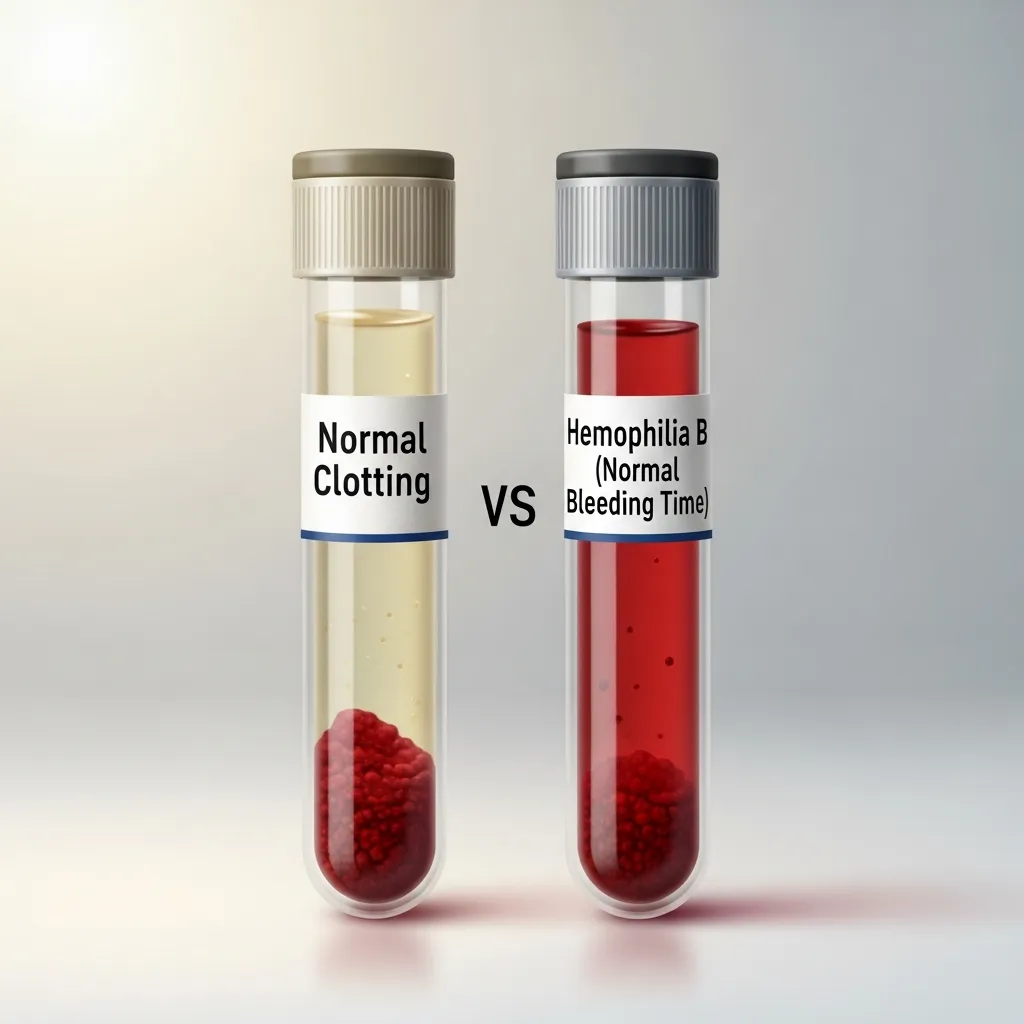 The most critical concept to grasp is the discrepancy between clinical symptoms and standard primary hemostasis tests. The bleeding time in hemophilia B is almost always completely normal.
What explains the discrepancy between clinical bleeding symptoms and normal test results?
When a patient with Hemophilia B gets a small paper cut, their platelets function perfectly. The platelets rush to the injury and form a temporary plug, stopping the bleeding within the normal 2 to 9 minute window. Because the bleeding time test only measures this initial platelet plug formation, the bleeding time in hemophilia B returns a normal result. The defect in Hemophilia B occurs after the platelet plug forms, during secondary hemostasis. The body fails to generate the fibrin mesh needed to lock the plug in place permanently.
How does the role of platelets differ from coagulation factors in Hemophilia B?
Platelets act as the first responders, while coagulation factors act as the reinforcement team. If you suspect a patient has a low platelet count or a platelet dysfunction like von Willebrand disease, the bleeding time test will be abnormal. Because Hemophilia B patients have normal, healthy platelets, their initial response to a superficial cut is flawless.
Which diagnostic tests accurately identify Hemophilia B?
Since the bleeding time in hemophilia B does not help diagnose the condition, doctors must rely on a specific series of blood tests.
What do initial screening tests like PT, aPTT, and platelet counts reveal?
When doctors suspect a bleeding disorder, they order a comprehensive coagulation panel. You can read more about what to expect from a hemophilia test to understand the process.
- Prothrombin Time (PT): Measures the extrinsic pathway of coagulation. This is normal in Hemophilia B.
- Activated Partial Thromboplastin Time (aPTT): Measures the intrinsic pathway. This test is significantly prolonged in Hemophilia B because Factor IX is missing.
- Platelet Count: Measures total platelets. This is normal in Hemophilia B.
Why is the Factor IX activity assay the gold standard for diagnosis?
If a patient has a prolonged aPTT but a normal PT, the clinician must determine exactly which intrinsic factor is missing. The Factor IX activity assay measures the precise percentage of functional Factor IX in the blood. This specific test confirms the Hemophilia B diagnosis and classifies its severity.
How does genetic testing confirm a Hemophilia B diagnosis?
Genetic testing maps the exact mutation on the F9 gene. According to the World Federation of Hemophilia [WFH, 2023], identifying the specific mutation helps predict the risk of the patient developing inhibitors and allows for accurate carrier screening in female relatives (link: https://wfh.org/).
What are the most effective management strategies for Hemophilia B?
Modern medicine offers highly effective ways to manage Hemophilia B and prevent long-term joint damage.
Should patients choose prophylaxis or on-demand treatment for bleeding?
Choose prophylactic treatment if preventing joint damage matters more than minimizing clinic visits. Prophylaxis involves regular, scheduled infusions of Factor IX to keep blood levels high enough to prevent spontaneous bleeds. Choose on-demand treatment if you have a mild form of the disease and only need to infuse Factor IX after a specific injury occurs.
How does Factor IX replacement therapy work for patients?
Replacement therapy involves injecting concentrated Factor IX directly into the patient’s vein. Doctors use either plasma-derived Factor IX, collected from human blood donations, or recombinant Factor IX, which is synthetically produced in a laboratory. Recombinant products are generally preferred due to a lower risk of transmitting blood-borne viruses.
What novel therapies and gene therapies are transforming Hemophilia B care?
The medical field is rapidly advancing beyond standard replacement therapy. Extended half-life Factor IX products allow patients to infuse less frequently. Furthermore, gene therapy advancements are revolutionizing the treatment of inherited blood disorders. In Hemophilia B gene therapy, scientists use a modified virus to deliver a functional copy of the F9 gene directly to the patient’s liver cells, allowing the patient to produce their own Factor IX.
How can patients safely navigate daily life with Hemophilia B?
Living with Hemophilia B requires careful planning and a strong partnership with healthcare professionals.
What practical steps help prevent bleeds in daily life?
Patients should maintain a healthy body weight to reduce stress on their joints. Engaging in low-impact exercises like swimming or cycling builds strong muscles that protect the joints from injury. Patients must avoid contact sports like football or hockey, which carry a high risk of severe trauma. Furthermore, patients must never take aspirin or nonsteroidal anti-inflammatory drugs (NSAIDs) like ibuprofen, as these medications interfere with platelet function and exacerbate bleeding risks.
How should patients recognize and respond to acute bleeding episodes?
Patients must learn to recognize the earliest signs of a joint bleed, often described as a bubbling or tingling sensation deep within the joint. Immediate treatment is essential. Patients should follow the R.I.C.E. protocol (Rest, Ice, Compression, Elevation) and administer a Factor IX infusion as directed by their hematologist.
Why is a multidisciplinary care team essential for Hemophilia B management?
Hemophilia B affects multiple body systems over a patient’s lifespan. Managing different kinds of blood diseases requires a Hemophilia Treatment Center (HTC). An HTC provides access to a comprehensive team, including hematologists, orthopedic surgeons, physical therapists, social workers, and genetic counselors. This team ensures the patient receives holistic care that addresses physical, emotional, and social needs.